
Yes, I endorsed and reviewed a conservative Christian’s new take on Adam and Eve. Allow me to explain why. But first, here is how Skeptic magazine described things:
One of the most influential conservative Christian theologians – William Lane Craig – goes all-in for evolutionary science and finds room for a Paleolithic Adam and Eve. This has left some schools of Christian orthodoxy scrambling to find a way forward. With any luck, they may start to reevaluate their opposition to evolution altogether.
The United States is peculiar among developed Western countries for its sizable population that refuses to accept evolutionary theory, the unifying idea in all of modern biology. This denial stems entirely from another American peculiarity: adherence to literalist interpretation of the Bible.
Roman Catholicism, as well as most mainline Protestant denominations (Anglican/Episcopalian, Presbyterian, Lutheran, etc.) made peace with evolution long ago. Yet, Biblical literalists in the evangelical tradition still cling to the notion that the world is just a few thousand years old and that the only species alive today are those that survived the Great Flood on Noah’s ark.
Not all creationists are young-earth creationists, however, and some even accept that the earth is old and that other plants and animals evolved by natural processes. While I can certainly understand why these old-earth creationists insist that human beings didn’t evolve from ape-like ancestors, splitting hairs this way isn’t very coherent. Firstly, all of the mountains of evidence we have for evolution and common ancestry applies as well to humans as it does to everything else. And secondly, in some ways, we have more evidence about human evolution than any other organisms because of our egocentric focus on ourselves. Within evolutionary biology, the study of human evolution gets its own entire sub discipline called paleoanthropology.
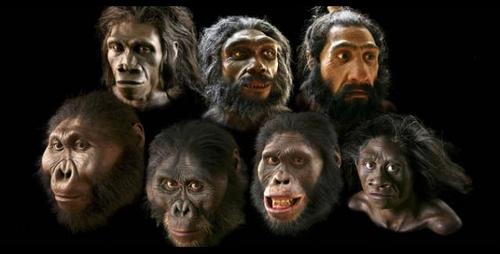
Oh well. Creationists have their reasons.
This is where Joshua Swamidass and William Lane Craig come in. The former a physician-scientist, the latter a theologian, both are devout Biblical Christians who are developing new ways of interpreting Christian scriptures that are compatible with what science has shown us about the history of life on earth, including of humans. Because evolutionary biology is important to me, and because rejection of evolution is tightly linked to things like climate change denial and vaccine skepticism, I applaud and support their efforts to help Christians embrace evolutionary ideas.
To be sure, I don’t believe pretty much anything about the Judeo-Christian creation myth. We know the earth and our solar system formed several billion years ago through the natural processes of cosmic evolution. We know that life emerged pretty quickly thereafter and has been evolving constantly ever since. We know that all living things, including humans, are related through common ancestry. We know that it is well beyond the realm of possibility that a global flood drowned all terrestrial life in the recent past. There is no serious scientific debate about any of that.
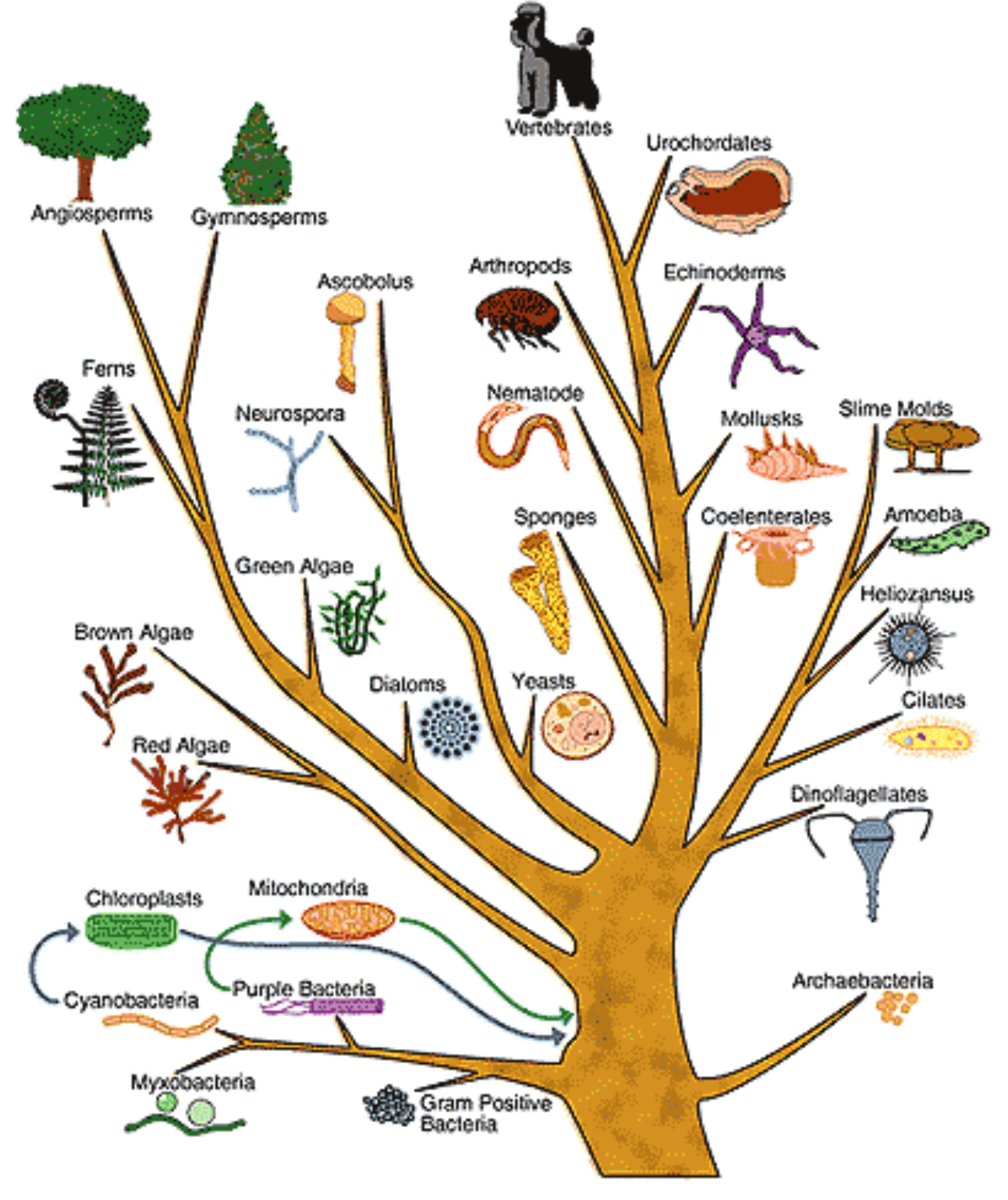
We also know that the modern human species evolved from an earlier species of human in sub-Saharan Africa in the last 200,000 years and spread around the globe in successive waves of migration, replacing earlier species of archaic humans, such as Homo erectus and the Neanderthals, who had similarly evolved and migrated out of Africa long before we did. Again, these are all scientific facts that we know with a great deal of certainty.
Many Christians have no difficulty accepting these scientific facts while maintaining their faith, but for those that do struggle, Swamidass and Craig have provided new avenues of reconciliation between Christian faith and Science. In 2019, I published an op-ed in USA Today, praising Swamidass’s model of a Genealogical Adam and Ave, which I expanded upon here.
And next, I wrote a review of Craig’s book, In Quest of the Historical Adam for the atheist magazine Skeptic. Michael Shermer, the editor-in-chief has allowed me to republish my review in full, which I do below.
To be sure, I took a lot of flak from my colleagues for these two endorsements (some it characteristically unkind), but I hope you can understand my reasons for breaking ranks and supporting these two thoughtful Christians in their efforts to bring more Christians into the fold of accepting proper evolutionary science.
-NHL
<<<<<<
Since the publication of On the Origin of Species in 1859, acceptance of evolution has met steadfast resistance from some corners of the Christian community. For myriad and complex reasons, the Christian rejection of evolutionary science is most intense and widespread here in the United States, concentrated in the Bible-centered evangelical denominations. This conflict both exemplifies and amplifies the larger culture wars that engulf our politics. But, the winds of change may be blowing, as yet another prominent American evangelical has signaled a shift toward full acceptance of evolution and its compatibility with fundamental Christian beliefs.
William Lane Craig is one of the most prolific and influential philosophers in the history of the evangelical tradition. His work is somewhat eclectic, weaving back and forth between theology and philosophy—he holds doctorates in both—and broaching topics such as the cosmological argument for God’s existence and the historicity of the resurrection of Jesus. Although he has held positions at Lutheran, Wesleyan, Catholic, and nondenominational Christian institutions, Craig attends a Baptist church and is based primarily at Houston Baptist University and Biola University, both regarded as staunchly conservative in their theological leanings. He is a past president of the Evangelical Philosophical Society and is among the most cited scholars in the philosophy of religion.
In addition to his voluminous scholarly work, Craig also engages the public through his Reasonable Faith Christian apologetics website and frequent appearances in the media. He can even be found sparring with public intellectuals who are as hostile to his beliefs as most evangelicals are to evolution, including Christopher Hitchens, Lawrence Krauss, Roger Penrose, and Michael Shermer, the publisher of this magazine. So sharp is Craig’s intellect that the professionally acerbic atheist Sam Harris has famously called him “the one Christian apologist who seems to have put the fear of God into many of my fellow atheists.”
I was therefore quite surprised when an advanced copy of Craig’s newest book, In Quest of the Historical Adam, arrived in my office with a request for an endorsement. What would I, a secular-humanist evolutionary biologist, find to endorse in a book about Adam and Eve? Quite a lot, it turns out. To be sure, evolution is not the main focus of the book. In fact, the first half is an erudite theological discussion of the book of Genesis. I must confess my supreme disinterest as I began to slog through what I expected to be the usual circular reasoning regarding divine inspiration, biblical authority, and so forth. Craig, after all, considers the Bible to be the inerrant word of God and believes that morality flows, solely and completely, from divine commands.
But my expectations were happily dashed. What I actually found was a penetrating literary analysis of the creation story of Genesis, heavily informed by archaeology and recent scholarship on contemporary texts from the ancient near east. Craig calls this a genre analysis and identifies ten specific resemblances to other texts that attempt to explain primeval history—in other words, creation myths.
Some examples of those resemblances include the frequent use of figurative rather than literal language, the inclusion of fantastical elements and representations that are contrary to what we know the author(s) actually believed, and inconsistencies in the text if taken literally. It was satisfying to read Craig grappling with the fact that Genesis 1 and 2 recount completely different creation stories, that no one in the ancient near east thought snakes could talk, and that literal days and nights could not exist before the creation of the sun and earth. Craig therefore concludes that the creation account in Genesis is mythical.
However, Craig’s analysis goes further and argues that the creation story of Genesis is not pure myth, but rather a genre known as mytho-history, in which the author is indeed recounting real events but in a figurative way. This classification for Genesis was first pioneered in the 1960s by Harvard Assyriologist Thorkild Jacobsen, who was among the top authorities in the world on Sumer and the Akkadian language. For example, several Mesopotamian texts include tales of global floods, no doubt stemming from the fact that the Tigris and Euphrates rivers frequently breach their banks with horrific consequences.
While it is patently ridiculous to hold an ancient flood story as evidence that the entire planet was ever covered in water, from the author’s perspective, his world was indeed inundated. The flood narratives are mythical retellings of real events. Importantly, Craig restricts this classification to the first eleven chapters of Genesis, declaring that much of the rest of the Bible does attempt to recount historical events with literal accuracy.
The classification of the biblical creation story as mytho-history provides Christians a means to hold on to the parts of Genesis that are essential to their faith without requiring them to believe the absurdities of a woman made from a rib, or a piece of fruit that imparts knowledge upon consumption. And what parts of Genesis are essential for evangelical Christians? 1) Adam and Eve were real historical persons; 2) Adam and Eve are the ancestors of the entire human race; 3) Adam and Eve had a relationship with God that involved a rebellion and subsequent admonishment; and 4) The sin of Adam and Eve is transmitted to all human beings genealogically. The latter two points are theological and unfalsifiable, so Christians can simply accept them as articles of faith. However, the first two points are those that can run afoul of scientific evidence and which Craig decides to tackle in the second half of the book.
Emboldened by his confidence that Adam and Even were real, but unbound by the literal placement of them in the Garden of Eden a few thousand years ago, Craig sets out to determine the earliest origins of humankind so that he can locate Adam there instead. Motivated reasoning for sure, but what follows is an honest exploration of the scientific evidence for what constitutes “the first” truly human being.
Craig’s work here is sweeping and impressive. In just a couple hundred pages, he summarizes much of what is known from the archaeology and paleontology of ancient human relatives, and what we know of the brains, behaviors, and cognitive abilities of extinct hominins such as Homo erectus, Homo habilis, and Neanderthals. Leaving no stone unturned in his quest to identify when and where the first humans lived, there is even an entire chapter on paleoneurology!
Craig relies on archaeological evidence in the form of cave paintings and other artistry to extrapolate information about abstract and symbolic thinking. He infers modern behaviors from evidence of mortuary practices and the fashioning of clothing and other adornments. Evidence of long-distance trade and transport of material goods implies economic and therefore social structuring. Craig summarizes his tour of ancient archaeology by declaring that individuals we would all recognize as human have walked the earth for at least 500,000 years.
Inferring the emergence of other human-unique cognitive abilities, including language, is even more difficult and for this, Craig explores the vocal and aural anatomy, expansion of the pre-frontal cortex, and reorganization and asymmetry of the cerebral lobes, indicating specialization of advanced cognition. In wrestling with the hominin fossil record, Craig declares that pretty much any way that you define “human,” Neanderthals and Denisovans meet the definition. His tour through the genomes of those two species bolsters this conclusion, leading him to surmise that humanity, as we define it, first emerged in the common ancestor of humans, Neanderthals, and Denisovans.
Craig put it even more strongly in an email to me, stating, “It is scientifically untenable and morally unconscionable to regard other persons who are basically just like us as subhuman.”
Finally, Craig takes aim at the genetic arguments against the possibility of Adam and Eve as ancestors of us all. We have long known that the current pool of genetic diversity in the human species definitively rules out the possibility of a genetic bottleneck of two individuals any time in the recent past. However, citing work by scientist S. Joshua Swamidass and others, Craig explains that, with a minimum of 500,000 years of diversification, this is indeed possible, with or without interbreeding with other hominins. To be sure, this possibility is so unlikely that scientists are safe to ignore it, but Craig is correct that this is the limit of what current genetic evidence can say. Assuming sole progenitorship, Adam and Even would have to have existed 500,000 or more years ago.
However, if we allow for interbreeding with other populations, including other hominin species, Adam and Eve could have existed much more recently, even in the last 10,000 years, as Swamidass has also shown. Craig does not favor this approach for both scientific reasons—the above-mentioned personhood of Neanderthals—and Biblical-literary ones. As Craig states it, “If we compare Genesis to other Mesopotamian creation stories, such as the Atrahasis Epic, we find that such stories share an etiological interest in telling of how all mankind came to exist.”
After expertly summarizing the fossil evidence for the evolution of human personhood, Craig arrives at a stunningly precise conclusion: the historical Adam was a real individual, of the species Homo heidelbergensis, that lived in central Africa around 750,000 years ago. He bases this conclusion on a range of genetic, archaeological, and paleontological evidence.
Of course, this conclusion will ruffle many, many feathers. Craig is a Southern Baptist, or very closely affiliated therewith, so by publicly affirming the fact of human evolution, he has jeopardized his standing in his own community. (I sympathize with him there!) The shockwave of this book is already being felt through the evangelical community. Will Craig be hailed as a visionary, or a pariah? Only time will tell. Of note, the Southeastern Baptist Theological Seminary has already scheduled a special conference on Craig’s book in March 2022.
Interestingly, the reactions will not align with the usual divides in Christian philosophy. Craig remains firmly in the traditionalist camp—those affirming the real existence of Adam and Eve, which has the most fraught relationship with evolutionary science. But the revisionist camp – those who teach that Adam and Eve is allegory—made peace with evolution long ago. Craig’s thesis may very well divide both camps. When I asked him about this, he stated flatly, “It never occurred to me that I am uniting both camps in opposition to my efforts, but that does seem to be the result.”
But for the secular and scientific communities, Craig’s book is an encouraging step forward. Far too often, the evangelical approach is to either deny, ignore, or discredit evolutionary science; or, even worse, they attempt to twist, misinterpret, or misuse the evidence to support their preferred conclusions. Craig does the opposite, thoughtfully embracing the evidence rather than quarreling with it.
By following where the data lead, rather than the other way around, Craig is modeling a healthy relationship between religion and science. There are myriad matters on which science is silent, leaving plenty of room for beliefs and values, but for other questions, we look to empirical evidence in our search for truth. Craig even gives examples of how future evidence could lead him to revise his position. The difference in his approach from that of, say, intelligent design creationism, is stark.
Craig begins his analysis by concluding that Genesis teaches that Adam and Eve were real human beings, and the first to fully be so. This is not a scientific conclusion. There are no such individuals as the first in a new species; that’s not how speciation works. But, surely knowing this, Craig doesn’t get tripped up on species designations and instead simply asks, “What does it mean to be fully human?”, followed by, “when and where were the first individuals to meet those criteria?” He begins with a theological question, uses theology to answer it, then asks a scientific question and uses scientific evidence to answer it. This is Stephen Jay Gould’s “separate Magisteria” put into action.
Craig’s work on reconciling Christian faith with scientific truth is part of a growing trend. Catholics, most mainline Protestant denominations, and revisionist evangelical organizations, such as Biologos, founded by Francis Collins, the former director of the National Institutes of Health, simply read the creation account as allegory. Now we are seeing progress even among traditionalist evangelicals.
Two years ago, Swamidass published a book called The Genealogical Adam and Eve that explains how our current understanding of population genetics and universal ancestry allows for a surprisingly recent “first couple” as ancestors of the entire human population. (Full disclosure: I publicly endorsed that book as well and for basically the same reasons.) Craig discusses Swamidass’s work on ancestry at length and, while Swamidass allows for a recent first couple living among an evolved population, Craig points to the deep past. Neither challenges the other; both are compatible with science.
So impressed was I with the paleonathropology discussions in Craig’s book that I wrote to Science magazine and offered to write a book review. Two years before, I reviewed the intelligent design book Darwin Devolves for Science and Skeptic and was highly critical, so I was eager to highlight an example of a Christian who approaches evidence properly and thoughtfully.
Science informed me that they had already asked Harvard/MIT geneticist Steve Schaffner to review the book. I mostly agree with Schaffner’s assessment, especially his final paragraph, in which he states, “it is entirely a good thing that an individual with Craig’s theological commitments and credentials turns to science to answer questions about the physical world, takes evolution as a given, and puts in the hard work to understand scientific findings.”
In a telling coincidence, I sat on a panel with Schaffner, Craig, and Swamidass, at the Reasons to Believe workshop on human origins in early 2020. Led by astrophysicist Hugh Ross, Reasons to Believe promotes a progressive, day-age model of Old Earth Creationism and denies that humans share common ancestry with any other species. However, conversations at the summit indicated their willingness to endorse other models that include human evolution, even though their own model does not. Swamidass, Schaffner, and I were there to bring scientific expertise, while Craig brought the Christian philosophy and theology.
And yet, I remember thinking that Craig kept venturing out of his lane to give his thoughts on the science of human origins. It was clear that he really knew his stuff, from fossils to genes, and now I understand why. He was in the midst of studying paleoanthropology and writing this book! The key point here is that Craig, like Swamidass at Peaceful Science, Collins and others at Biologos, and perhaps soon Reasons to Believe, is working inside the evangelical community toward a more appropriate engagement with scientific evidence.
I am aware that few in the skeptical community will share my enthusiasm for this wave of evangelical Christians embracing modern evolutionary science. Like Craig, I may even be risking my standing in my own community. But as I see it, the chance for peace between science and religion just got a boost, and the big winner here is science.
Research has shown that refusal to accept evolution is connected to larger science denial including that of climate change and vaccine safety. By leading more Christians away from their mistrust of science, Craig’s work helps to undercut science denialism and to avoid the global calamities that could result.
While many skeptics and atheists seem to be holding out for nothing less than the complete dismantling of organized religion, those of us that live in the real world prefer to focus time and energy on bringing together as many people as possible to face the immediate threats facing our society, such as pandemics and climate catastrophes. By working to resolve conflicts over science, Craig, Swamidass, Collins, and others are striking at one of the biggest planks that divides us.
For this reason, I applaud Craig for the courage it took to stake his position so publicly. As he explains so well, Christians can feel safe and secure in celebrating the fascinating science of human evolution. They may even see it as divine.
-NHL


 The Human Evolution Blog
Leave a reply to John Harshman Cancel reply