
This post was co-authored with Arthur Hunt of the University of Kentucky, who first pointed out these errors on the Peaceful Science forum. I wish I had spotted these myself, but I took Behe’s word on the polar bears because it all sounded solid. This is an important reminder to ALWAYS check the references for yourself. Lesson learned and kudos to Art for catching this and for working with me on this post. -NHL
 The release of Michael J. Behe’s newest book, Darwin Devolves: The New Science About DNA That Challenges Evolution, is nearly upon us. (See my review in Science). The first chapter was made publicly available to entice readers. In this chapter, Behe outlines his main thesis: at the molecular level, adaptive changes are largely due to events that in some way destroy or damage proteins and enzymes. He calls it the first rule of adaptive evolution and to illustrate his point, he discusses the evolution of polar bears and describes the molecular events in that evolution as little more than a series of damaging mutations that result in a more adapted organism.
But first, a quick introduction to Behe for those who may not know who Behe is or where this is coming from. With the release of his first book, Darwin’s Black Box, in 1996, Behe helped revolutionize and reorganize the resistance to modern evolution under the banner known as “Intelligent Design,” often abbreviated as ID. Many consider ID as simply creationism by another name, but the ID community works hard to distance themselves from that label. They insist that ID is a scientific theory, not a religious one, based on what they consider evidence that cells and organisms were designed intentionally, rather than the result of the aimless and unguided forces of evolution. Scientists and federal courts disagree, but this has not stopped the steady steamroller of books and articles from the ID community.
Fast forward to 2019. In Darwin Devolves, Behe makes the argument that natural selection, which he prefers to call “Darwinism,” is driven largely, even exclusively, by mutations that degrade or destroy protein function. At the outset, it must be said that we have known for many decades that, occasionally, harming or even destroying a gene or protein can actually be good for the organism. What Behe is saying is that harming genes is pretty much the only way that unguided mutations can ever help an organism. That’s just not the case, but I’ll get to that later.
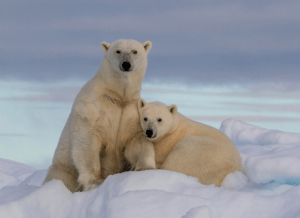
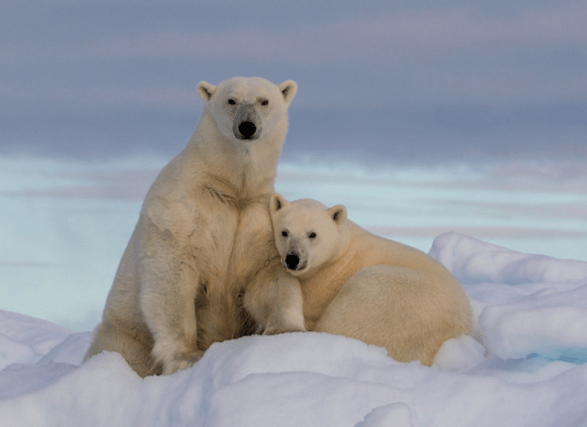
Back to the polar bears. Behe offers them as an example of how harming genes can help an organism and lead to adaptive evolution. Imagine an ancestor bear population that looked pretty much like brown bears. Then came some random mutations that reduced the production or deposition of pigment into the fur of the bears. This made the bears white and – voilà! – the bears acquired natural camouflage in snowy climates so as to better sneak up on their prey.
This seems like a logical example. Behe uses this example to bolster his claim that this is basically all that unguided mutations can do. However, even in this apparently “pro-Darwinism” example, Behe both exaggerates and misrepresents what science has actually revealed. The evolution of polar bears was not only a matter of harmful mutations, as a close look clearly reveals.
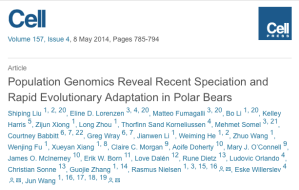
The key reference here is a 2014 paper in Cell. In this study, researchers did genome sequencing of 89 polar bears and brown bears and discovered the molecular changes that distinguish these very closely related species, using the giant panda as the reference sample. The results were fascinating and revealed that polar bears and brown bears have been separate populations with limited gene flow for less than 500,000 years.
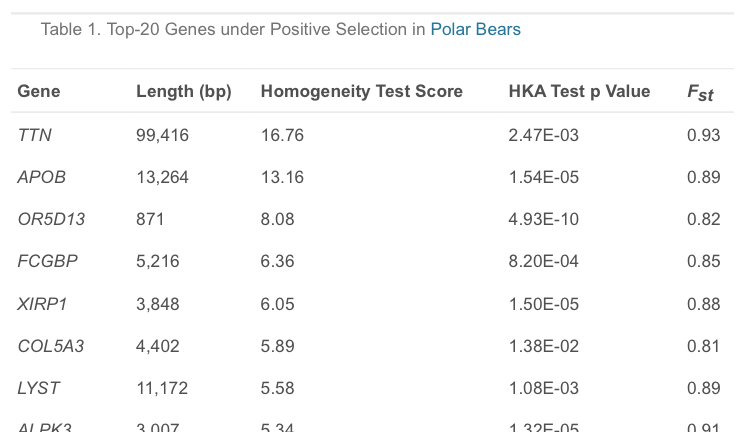
 The researchers identified a list of protein-coding polar bear genes that had experienced recent positive selection, meaning that evolutionary forces had strongly favored specific variants. Brown bears, on the other hand, have experienced much less positive selection since the populations diverged. This means that polar bears have experienced stronger selective pressures and have diverged from the ancestors more than brown bears have. This matches what the fossil evidence suggests. Basically, a population of brown bears ventured northward and, in response to the very different climate, evolved into polar bears. The ancestral population stayed pretty much the same and are the brown bears of today.
One of the genes that experienced the strongest selection is APOB, which encodes apolipoprotein B, a protein involved in the transport of fat molecules in the blood. This makes sense because polar bears subsist on a diet extremely rich in saturated fats, yet don’t develop heart disease with great frequency. Quoting Behe:
The polar bear’s most strongly-selected mutations – and thus most important for its survival – occurred in a gene dubbed APOB, which is involved in fat metabolism in mammals, including humans. That itself is not surprising, since the diet of polar bears contains a very large proportion of fat (much higher than in the diet of brown bears) from seal blubber, so we might expect metabolic changes were needed to accommodate it.
First of all, as shown in Table 1 of the paper, APOB harbors the second most strongly-selected set of variants, not the first, but we can let that one slide.
Behe continues:
But what precisely did the changes in polar bear APOB do to it compared to that of other mammals? When the same gene is mutated in humans and mice, studies show it frequently leads to high levels of cholesterol and heart disease. The scientists who studied the polar bear’s genome detected multiple mutations in APOB. Since few experiments can be done with grumpy polar bears, they analyzed the changes by computer. They determined that the mutations were very likely to be damaging -that is, likely to degrade or destroy the function of the protein the gene codes for.
Some of them, possibly. Definitely not all of them or even most of them, as I’ll soon explain. He continues:
A second highly-selected gene, LYST, is associated with pigmentation, and changes in it are probably responsible for the blanching of the ancestors’ brown fur. Computer analysis of the multiple mutations of the gene showed that they too were almost certainly damaging to its function. In fact, of all the mutations in the seventeen genes that were most selected, about half were predicted to damage the function of the coded proteins. Furthermore, since most altered genes bore several mutations, only three to six (depending on the method of estimation) out of seventeen genes were free of degrading changes. Put differently, 65-83 percent of helpful, positively selected genes are estimated to have suffered at least one damaging mutation.
Now it’s getting harder to excuse Behe’s exaggeration. Specifically, using one specific predictive algorithm, the authors found that only 7 of the 17 genes with the strongest signatures for positive selection are unequivocally predicted to possess at least one “damaging” mutation. Even Behe’s “about half” is just 41%, which means that the lower limit on Behe’s estimation is also wrong. It’s not 65-83%, it’s 41-83%. The range is so wide because computational predictions invariably involve uncertainty.
But more importantly, by Behe’s math, if a gene harbors five enhancing mutations and one diminishing one (by computer prediction), it counts as “damaged.” Any number of gain-of-function mutations can be overtaken by a single damaging one. While that could be true in some cases, a nonsense mutation for example, there is no reason to assume it must be true in all cases.
Considering how little is known about the molecular biology of polar bears, it is entirely possible that none of the 17 most positively selected genes in polar bears are “damaged.” Quoting from the Supplemental information in the paper:
We find no fixed missense mutations specific to the polar bear lineage associated with human diseases according in the Human Gene Mutation Database. However, the top 20 genes are significantly enriched with genes previously associated with metabolic diseases and traits and humans (p-value = 0.042) from the GWAS catalog, discussed in the main text.
In other words, many of the 20 most positively selected genes in the polar bear genome are orthologs of genes that have variants (mutations) in the human population associated with metabolic disease. When these genes are damaged by mutations in humans, the humans are more likely to suffer metabolic diseases. But Behe believes – with no hard evidence – that these same genes, when damaged, protect the polar bears from metabolic disease.
There’s more. If we come back to APOB, the polar bear gene that Behe spends the most time discussing, we find that the authors of the study have a very different interpretation of the data than Behe does. Quoting the paper again [emphasis added]:
Substantial work has been done on the functional significance of APOB mutations in other mammals. In humans and mice, genetic APOB variants associated with increased levels of apoB are also associated with unusually high plasma concentrations of cholesterol and LDL, which in turn contribute to hypercholesterolemia and heart disease in humans (Benn, 2009; Hegele, 2009). In contrast with brown bear, which has no fixed APOB mutations compared to the giant panda genome, we find nine fixed missense mutations in the polar bear (Figure 5A). Five of the nine cluster within the N-terminal ba1 domain of the APOB gene, although the region comprises only 22% of the protein (binomial test p value = 0.029). This domain encodes the surface region and contains the majority of functional domains for lipid transport. We suggest that the shift to a diet consisting predominantly of fatty acids in polar bears induced adaptive changes in APOB, which enabled the species to cope with high fatty acid intake by contributing to the effective clearance of cholesterol from the blood.
Clearly, the authors do not expect the polar bear APOB to be broken or damaged. Rather, a bare majority of the amino acid changes are clustered in the most important region for the clearing of cholesterol from the blood. This argues that these mutations likely enhance the function of apoB, at least when it comes to surviving on a diet high in saturated fats.
It is also worth noting that apoB does much more than clear fatty acids from the blood. It is a very large protein that has many biochemical activities and is a central player for lipid and cholesterol transport. Even if “damaging” mutations might be beneficial in one context, they could very well be harmful or lethal in another. Moreover, mice that lack apoB are not viable.
To recap: 1.) There is no evidence for Behe’s claim that APOB is degraded or diminished in polar bears and everything we know about the protein from other mammals suggests the opposite. And 2.) Behe’s claim that the most common adaptive changes in polar bears are those that degrade or destroy proteins is not supported, and the evidence suggests otherwise. And yet Behe makes this bold claim:
It seems, then, that the magnificent Ursus maritimus has adjusted to its harsh environment mainly by degrading genes its ancestors already possessed. Despite its impressive abilities, rather than evolving, it has adapted predominantly by devolving. What that portends for our conception of evolution is the principal topic of this book.
The word “devolving” actually doesn’t make any sense (here’s why), but the much more important point here is that, the analysis of the polar genome does not support Behe’s claim that the evolution of polar bears was mostly driven by damaging mutations. In fact, the polar bear variant of APOB is almost certainly enhanced compared to the ancestral version, at least in the ways that are important to the challenges of being a polar bear.
<<<<<<<<
IMPORTANT UPDATE: After this post went live, Behe wrote this incredibly uncharitable response in which he called me “incompetent” (and Art Hunt is “some other guy”) and described our review in Science as “mind-bogglingly shoddy.” He implores Jerry Coyne, who had blogged about this post, to “find a more reliable informant” than me. I was pretty surprised at the nastiness in this response, given that Behe has a reputation as being kind and soft-spoken. In fairness, few of us are at our best when caught in an obvious mistake. I digress.
In his response, Behe claims that I misrepresented his position and that he never says that damaging things is all that unguided adaptive mutations can ever do, just that this is mostly what they do. This sounds like a backpedal to me, but I’m perfectly happy to let him speak for himself on how he characterizes the preponderance of evidence. (Richard Lenski, one of my co-authors on the Science review, has written an eloquent blog post about damaging versus innovative mutations.) But also, as you can see above, I block-quoted Behe extensively to avoid any possible charge of “mischaracterizing” his position. He made that charge anyway.
Behe devotes only two sentences to a defense of his position on polar bears and here they are:
Below is the relevant information from Liu et al.’s Table S7. Those who can understand the table will see that it supports every actual, undistorted claim I made about the polar bear.
Behe then pastes this as “the relevant information” from the Table:
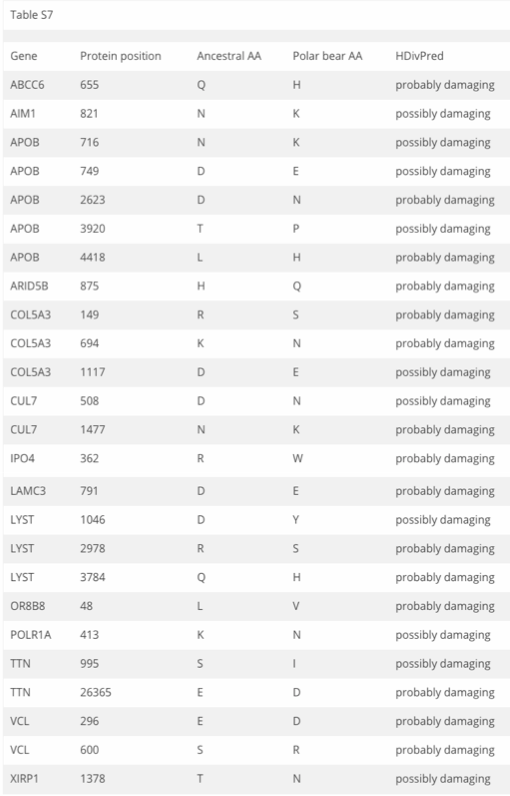
^ This ^ is not the original chart that appears in the paper. Behe left out most of the mutations from the original chart. He also left out the results of a different predictive algorithm for characterizing the mutations. Here is the actual Table S7:
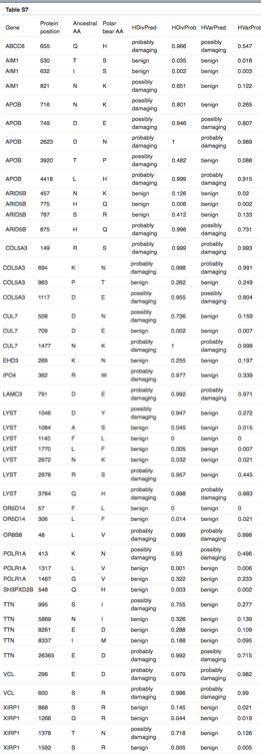
I first want to call attention to the two right-most columns of this chart. I have zoomed in on the top half of this chart, to make it easier to inspect:
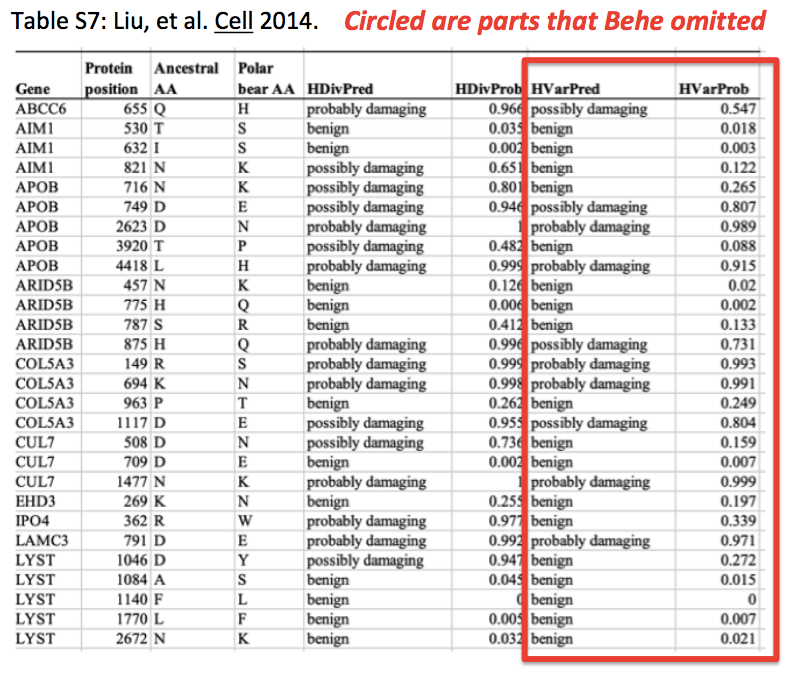
The two columns that Behe cut off contain the results of a different algorithm for predicting the effect of the mutations. You will notice that this algorithm makes different predictions for many of the mutations, describing many more of them as “benign” and many more of them “possibly” rather than “probably” damaging.
Behe also chose to include only some of the mutations from this Table. I’ve circled all of the mutations that he left out, again focusing only on the top half of the chart:

Once again, Behe’s selective presentation of the chart leaves out all of the alterations that are not predicted to damage the protein in which they occur. Combining both of Behe’s omissions into one visual:
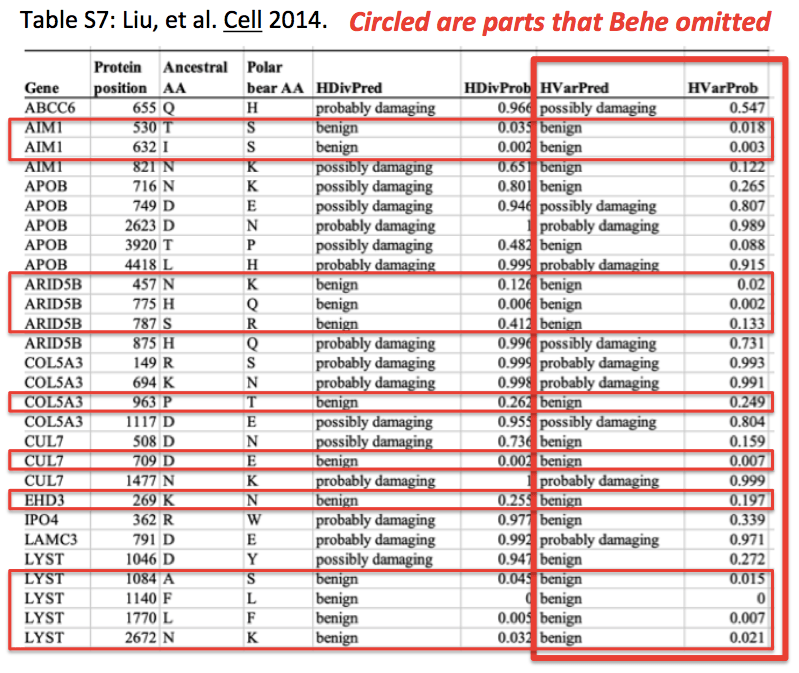
In Behe’s defense, he doesn’t explicitly say that he’s presenting the whole Table. So he isn’t lying exactly. Instead, he says that he is presenting “the relevant information” from the Table. I find this deeply misleading. This whole discussion is about the nature of adaptive mutations in the evolution of species and Behe’s arguments is that most of them are damaging. By selectively presenting only the mutations that are predicted to fit his argument, he is intentionally leaving out evidence that is contrary to his position.
After all, what is the purpose of showing the chart at all? To show that some mutations that drove polar bear evolution are damaging? He didn’t need a chart to make that point and no one would argue with that. I suspect that if the unaltered Table S7 gave the impression that the overwhelming number of adaptive mutations were damaging, Behe would have shown the whole thing.
In reality, Table S7 does not give that impression at all, and so he slices it up with surgical precision so that he can present “the relevant information,” that is, the information that appears to support his position. And, at least when it comes to APOB, even the selectively edited information probably doesn’t support his position either, regardless of what the predictive algorithm says, as I (and the study’s authors!) explain above.
The evolution of polar bears is the opening story of Behe’s book, the example he uses to describe his concept of “devolution.” But if you actually consult the data itself, it tells a very different story than Behe does.
<<<<<<<<<
For more of the problems with Darwin Devolves, see my review in Science (co-authored with Richard Lenski and Josh Swamidass, open-access version). I also published a more comprehensive look at the book for Skeptic magazine (and they gave it the cover!).
-NHL (with special guest, Art Hunt)




 The Human Evolution Blog
Leave a reply to John Detwiler Cancel reply